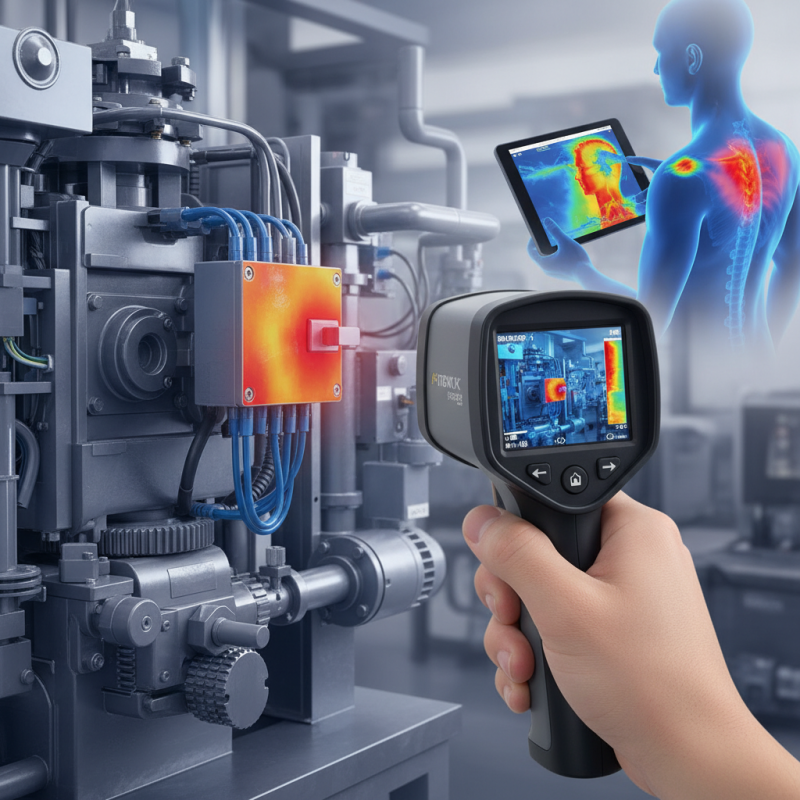
Thermal Image Sensors have revolutionized various industries. They provide insights that are not visible to the naked eye. By detecting heat patterns, these sensors allow for better decision-making in critical situations.
In industrial settings, Thermal Image Sensors detect equipment malfunctions before they escalate. They can spot overheating components, ensuring safety and efficiency. This proactive approach minimizes downtime and repair costs.
In the medical field, Thermal Image Sensors assist in diagnosing conditions. By visualizing heat variations, professionals can identify inflammation or infections early. However, reliance on this technology must be balanced with traditional methods for accuracy. Ultimately, while Thermal Image Sensors offer remarkable benefits, understanding their limitations is crucial.
Benefits of Thermal Image Sensors in Industrial Applications
Thermal image sensors play a vital role in various industrial applications. These sensors capture heat patterns, providing insights into operational efficiency. In manufacturing, they can detect overheating machinery, helping to prevent costly breakdowns. According to a report by MarketsandMarkets, the thermal imaging market is expected to reach $8.2 billion by 2025, emphasizing their growing importance.
In the realm of electrical maintenance, thermal image sensors are indispensable. They identify hot spots in electrical circuits, enabling proactive maintenance. This prevents shutdowns and safeguards equipment. A study indicates that routine thermal inspections can reduce equipment failure by over 30%. However, reliance on these technologies might lead to complacency if workers undervalue traditional maintenance techniques.
Thermal imaging is also instrumental in building inspections. It detects insulation problems, moisture leaks, and energy loss. A report from the U.S. Department of Energy reveals that improper insulation can lead to energy losses of up to 20%. Still, thermal imaging is not infallible. Incorrect interpretation of images can happen, leading to misguided decisions. Thus, combining expertise with technology is essential for optimizing performance in industrial settings.
Enhancing Safety in Fire Prevention with Thermal Imaging Technology
Thermal imaging technology plays a crucial role in fire prevention. It detects heat patterns that the naked eye cannot see. This capability allows for early identification of potential fire risks within various environments, from industrial settings to residential areas.
According to a report by the National Fire Protection Association (NFPA), over 1.3 million fires were reported in the United States in 2019. These incidents resulted in thousands of injuries and billions in property damage. By utilizing thermal image sensors, organizations can reduce these statistics significantly. These sensors can spot overheating equipment or areas of concern before they become dangerous.
A study by the Infrared Training Center suggests that using thermal imaging can also enhance response times by 30%. Quick detection is vital for firefighters and safety personnel. However, the effectiveness of thermal imaging can vary based on environmental conditions. Factors like smoke and humidity may hinder clarity. Continuous training and proper maintenance of the equipment are essential to maximize these systems' benefits. Utilizing thermal imaging is a step forward in fire safety, but it requires ongoing evaluation and improvement.
Benefits of Using Thermal Image Sensors in Fire Prevention
Thermal image sensors provide significant benefits in fire prevention, including early detection of heat sources, enhanced safety for personnel, cost efficiency in prevention measures, reduced response time to emergencies, and improved visibility in smoke-filled environments. The above chart illustrates how these benefits rank in terms of their importance to fire safety initiatives.
Improving Building Energy Efficiency through Thermal Imaging Solutions
Thermal imaging solutions offer significant benefits for enhancing building energy efficiency. By clearly revealing heat loss, these sensors help identify areas needing insulation upgrades. Many buildings suffer from unnoticed drafts, leading to wasted energy. Homeowners can save on heating and cooling costs by addressing these issues early.
Using thermal image sensors is straightforward. A quick scan can highlight temperature differences across walls and ceilings. This visual data allows you to prioritize repairs effectively. For best results, conduct assessments during varying weather conditions. This will reveal the most critical areas needing attention.
Tips: Regular inspections are essential. Consider scheduling assessments at least once a year. Educate building occupants on the importance of energy efficiency. Small changes, like sealing windows, can make a meaningful impact. Investing time in maintenance today can lead to savings tomorrow. Reflect on your current energy practices and explore how thermal imaging can improve your approach.
Advancements in Medical Diagnostics Using Thermal Imaging Sensors
Thermal imaging sensors are revolutionizing medical diagnostics. By detecting heat patterns, these sensors provide insights into bodily functions. For instance, they can identify inflammation or abnormal growths. Unlike traditional methods, thermal imaging is non-invasive and safe for patients.
Using thermal imaging, doctors can visualize conditions that may not be apparent through other means. Early detection of diseases can drastically improve treatment outcomes. However, the technology is not foolproof. Interpretation of thermal images requires specialized training and experience. Sometimes false positives or negatives occur, leading to potential misdiagnoses.
Tip: When using thermal imaging in clinical settings, ensure the sensors are regularly calibrated. This practice helps maintain accuracy in readings. Furthermore, ongoing education for medical professionals is crucial. Understanding the technology's limitations is essential for effective diagnosis. It is vital to combine thermal imaging with other diagnostic tools for comprehensive patient care.
What Are the Benefits of Using Thermal Image Sensors? - Advancements in Medical Diagnostics Using Thermal Imaging Sensors
| Benefit |
Description |
Application Area |
| Improved Diagnosis |
Thermal image sensors allow for the detection of temperature variations, enhancing the ability to diagnose conditions like infections and inflammations. |
Radiology, Oncology |
| Non-Invasive |
Thermal imaging is non-invasive, allowing for safe monitoring of patients without the need for contact or radiation exposure. |
Primary Care, Wellness Checks |
| Real-time Monitoring |
Thermal sensors provide immediate feedback, allowing clinicians to monitor changes in patient conditions in real-time. |
Emergency Medicine, ICU |
| Cost-Effective |
Thermal imaging can reduce the costs associated with more invasive diagnostic procedures and hospital stays. |
General Practice, Preventive Medicine |
| Versatility |
Thermal imaging can be utilized across a wide range of medical disciplines and applications, from dermatology to surgery. |
Surgery, Dermatology |
Applications of Thermal Imaging in Security and Surveillance Systems
Thermal imaging technology plays a crucial role in security and surveillance systems. It enables the detection of temperature variations in objects, which helps identify potential threats. Unlike conventional cameras, thermal sensors work effectively in low-light or no-light conditions. This feature is particularly valuable for nighttime surveillance, where visibility is limited.
In various applications, thermal imaging helps monitor perimeters and sensitive areas. Security agencies can use this technology for fencing, detecting intruders trying to breach barriers. Additionally, law enforcement utilizes it for search and rescue operations, even in challenging weather conditions. With its ability to spot heat signatures, thermal imaging enhances situational awareness for security personnel.
However, relying solely on thermal imaging has its drawbacks. False positives can occur, especially in environments with several heat sources. These limitations require careful interpretation of data. Training personnel to effectively analyze thermal images is essential for accuracy. Balancing thermal imaging with other surveillance methods can lead to more reliable outcomes.
Conclusion
Thermal image sensors have become increasingly valuable across various sectors due to their unique ability to detect and visualize heat. In industrial applications, these sensors enhance operational efficiency by detecting equipment overheating and preventing costly downtimes. Moreover, their role in fire prevention is paramount, as they significantly improve safety measures by identifying potential fire hazards that may not be visible to the naked eye.
Beyond industrial use, thermal image sensors contribute to building energy efficiency by pinpointing areas of heat loss, thereby enabling targeted insulation measures. In the medical field, advancements in diagnostics are achieved through non-invasive temperature monitoring, aiding in the early detection of health issues. Lastly, security and surveillance systems benefit from thermal imaging by providing enhanced visibility in low-light conditions, ensuring comprehensive monitoring. Overall, the adoption of thermal image sensors is transforming various industries, making operations safer and more efficient.
 AceHawky