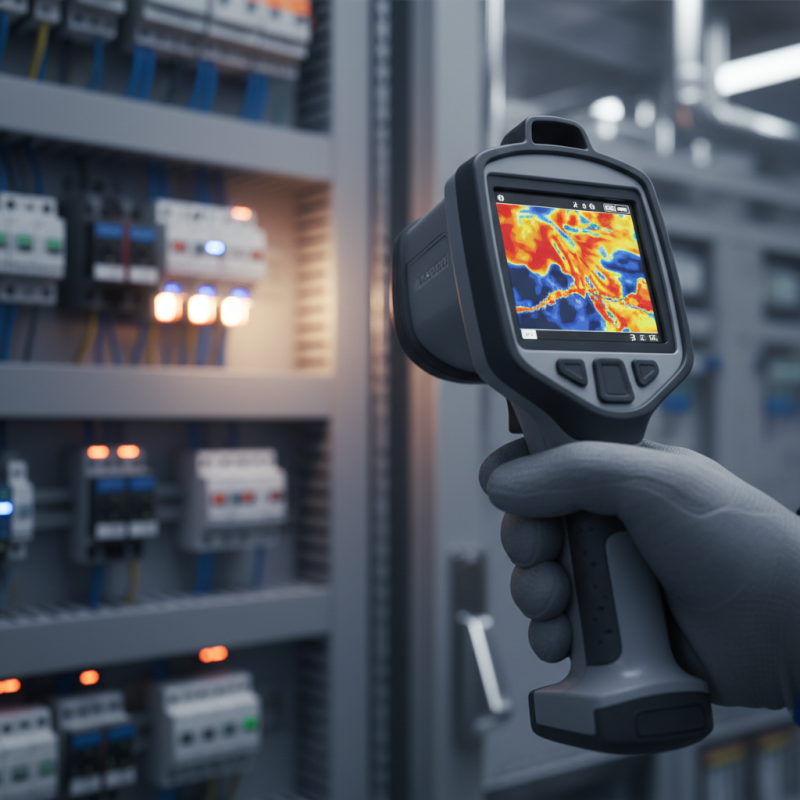
In today’s technical landscape, selecting the right tools is critical. An Ir Thermal Imager has become essential for many applications. These devices detect infrared radiation, providing valuable insights into thermal patterns. Their accuracy and efficiency are impressive. With a simple point-and-shoot design, they offer ease of use.
However, not all thermal imagers are created equal. Some users may find their choice overwhelming. The right Ir Thermal Imager should align with specific requirements. Consider factors like resolution and temperature range. Users often overlook these details, leading to less effective results.
Ultimately, investing in a quality Ir Thermal Imager can enhance productivity. It allows for early problem detection in various fields. Embrace this technology, but reflect on your specific needs. The effectiveness of these tools lies in thoughtful selection and application.
Understanding the Basics of IR Thermal Imaging Technology
Infrared (IR) thermal imaging technology has gained traction across various industries, offering unique benefits for a range of applications. This technology operates by detecting infrared radiation emitted by objects, creating thermal images that highlight temperature variations. According to a report by Markets and Markets, the global thermal imaging market is projected to reach $8.5 billion by 2025, indicating a growing acceptance and reliance on this technology.
The principle behind IR thermal imaging is relatively simple. It converts infrared radiation into visible images. These images allow users to see variations in temperature, which can be critical in applications such as building inspections, electrical assessments, and predictive maintenance. For instance, detecting overheating components can prevent equipment failure and reduce downtime. In fact, studies have shown that implementing thermal imaging can lead to a 30% reduction in costs associated with maintenance.
Tip: When using an IR thermal imager, ensure proper calibration before each use. This increases accuracy and reliability in readings.
Despite its advantages, users should remain aware of limitations. Factors such as emissivity, distance, and ambient temperature can affect the accuracy of thermal readings. Understanding these influences is essential for effective interpretation of results. As the technology evolves, continuous education on its parameters is crucial for maximizing its potential.
Tip: Regularly review and update your knowledge on thermal imaging technology. This practice helps maintain a competitive edge in your field.
Key Applications of IR Thermal Imagers in Various Industries
Infrared (IR) thermal imagers have significant applications across various industries. These devices help in detecting heat patterns and temperature variations. This capability is crucial in maintenance, inspections, and monitoring processes.
In the healthcare sector, IR imagers assist in identifying fever and other health-related issues. Medical professionals can detect elevated body temperatures quickly. This non-invasive method enhances patient comfort and improves diagnosis speed.
In building inspections, thermal imagers identify insulation failures and moisture leaks. They provide clear visual evidence of problems, allowing for timely repairs. Insulating a building properly saves energy and costs. However, using thermal imaging requires skill. Misinterpretation of images can lead to incorrect conclusions.
Tips: Ensure you understand the basic principles of thermal imaging. Take training courses to improve your skills. Familiarize yourself with the specific needs of your industry to maximize the device’s effectiveness.
In industrial settings, IR thermal imagers help monitor equipment temperatures. They prevent overheating and equipment failure, enhancing safety. However, reliance solely on thermal data can be misleading. Cross-check findings with other diagnostic tools for accuracy.
Comparative Advantages of IR Thermal Imaging Over Other Technologies
Infrared (IR) thermal imaging offers distinct advantages over traditional inspection methods.
Thermal imagers capture temperature variations in objects, providing a visual representation of heat distribution.
This technology allows for real-time monitoring and analysis, which is invaluable in various industries.
In fact, studies show that IR imaging can detect faults in electrical systems up to 25% earlier than conventional methods.
In sectors like building diagnostics, IR imaging identifies heat leaks and insulation issues effectively.
A report from the American Society of Thermographers emphasizes that 80% of energy loss in industrial environments stems from unaddressed thermal inefficiencies.
Unlike visual inspections, thermal imagers reveal hidden problems without direct contact, preserving the integrity of the inspected components.
However, it’s worth noting that IR imaging may face challenges in environments with significant ambient temperature fluctuations, which can introduce variability into readings.
Moreover, thermal imaging enhances safety protocols. Inspectors can evaluate live electrical panels from a safe distance.
The ability to mitigate risks is particularly crucial in industries where equipment failures can result in hazardous situations.
Nonetheless, improper calibration or operator inexperience can lead to misinterpretation of results, underscoring the need for comprehensive training and oversight in IR thermal imaging applications.
Industry-Specific Standards and Specifications for Thermal Imaging Devices
When selecting a thermal imaging device, understanding industry-specific standards is critical. Each sector has unique requirements for performance and safety. For instance, electrical inspections demand high precision to identify overheating components efficiently. In contrast, building and construction projects often focus on moisture detection and insulation flaws. Specifications may vary widely, reflecting each industry’s distinct challenges.
Thermal imagers are evaluated based on resolution, sensitivity, and temperature range. For example, a higher resolution allows for clearer, more detailed images, which aids in precise diagnoses. However, cost can increase significantly with these specs. It’s vital to find a balance between performance and affordability. Some imagers may not meet all your needs, highlighting the need for careful assessment. Choosing the wrong device can lead to missed issues or unnecessary expenses.
Reliability is another key factor. Many thermal imagers face challenges under harsh conditions. They must withstand vibrations, dust, and moisture. Users should check ratings for durability. A device that meets specific industry specs might still falter in real-world scenarios. Always consider how frequently you’ll use the imager. Frequent use in tough environments requires more rugged options, but these can come at a premium price.
Future Trends and Innovations in Thermal Imaging Technology
Thermal imaging technology is rapidly evolving. As the demand for precision and efficiency increases, new trends emerge. One promising direction is the miniaturization of thermal imagers. Smaller devices mean greater portability. Users can now carry high-quality thermal imaging capabilities in their pockets.
Moreover, advanced algorithms improve image processing. This enhancement leads to sharper images and better diagnostic capabilities. Users benefit from more detailed insights, whether in building inspections or medical applications. The software that accompanies these devices is becoming more intuitive, promoting ease of use.
Tips: When choosing a thermal imager, consider the environment you’ll use it in. Do you need a handheld version or a fixed installation? Think about battery life, too. A device that lasts longer allows for extended operations without interruptions.
Emerging technologies are also integrating thermal imaging with artificial intelligence. This innovation helps in predictive maintenance and faster decision-making. While these developments are exciting, they can present challenges. Users must stay updated on technology changes and software updates for the best performance.
Why Choose an Ir Thermal Imager for Your Needs? - Future Trends and Innovations in Thermal Imaging Technology
| Feature |
Benefits |
Future Trends |
| High Sensitivity |
Allows for accurate detection of temperature variations in small objects. |
Integration with AI for improved analysis and decision-making. |
| Compact Design |
Easier to handle and transport for fieldwork. |
Development of handheld models with superior functionalities. |
| Real-Time Imaging |
Enables immediate analysis and reaction to thermal measurements. |
Enhanced video streaming capabilities for real-time monitoring. |
| Wireless Connectivity |
Facilitates remote access and data sharing. |
Increased use of cloud technology for data storage and analysis. |
| Multi-Functional Usage |
Applicable in various industries such as electrical, mechanical, and healthcare. |
Broader applications with specialized software for different sectors. |
FAQS
: IR thermal imaging technology detects infrared radiation to create thermal images showing temperature variations.
It helps in maintenance, ensures quick diagnostics, and can reduce costs related to equipment failures by 30%.
Proper calibration before each use enhances the accuracy and reliability of thermal readings.
Yes, it quickly detects fever and other health issues non-invasively, enhancing patient comfort.
Factors like emissivity, distance, and ambient temperature can mislead interpretations of thermal data.
Thermal imaging detects faults earlier and reveals hidden problems without direct contact, improving inspection efficiency.
Misinterpretation of images is possible. Understanding the device's principles and industry needs is essential.
Take training courses and regularly update your knowledge to maintain effectiveness in your field.
Sole reliance on thermal readings can be misleading; using other diagnostic tools ensures accurate conclusions.
Yes, improper use or lack of training can lead to incorrect results, highlighting the need for proper education.
Conclusion
IR thermal imagers are essential tools in various industries, leveraging advanced infrared imaging technology to provide accurate thermal data. Understanding the fundamentals of IR thermal imaging reveals its ability to detect temperature variations, which can be applied in fields such as construction, electrical maintenance, healthcare, and safety inspections. The comparative advantages of IR thermal imagers, including non-contact measurement and high sensitivity, set them apart from traditional technologies, enhancing efficiency and reducing risk in operational environments.
As industry-specific standards continue to evolve, professionals are increasingly relying on IR thermal imagers to meet rigorous specifications. Future trends indicate ongoing innovations that will further enhance their capabilities, making them indispensable in predictive maintenance and diagnostics. Overall, choosing an IR thermal imager aligns with the growing demand for precise monitoring and proactive management in diverse sectors.
 AceHawky